Greenfield Village is working historical museum and village in Dearborn, Michigan, birthplace of Henry Ford and the Ford Motor Company. Henry Ford's masion, FairLane, in on the University of Michigan Dearborn campus and is absolutely beautiful. Henry had a love for history (like me) and set out to preserve and restore as many artifacts and homes as possible. He collected millions of machines, planes, cars, trains, farm tools, equipment, household goods, papers, magazines, etc. He placed all of those in the Henry Ford Museum which is built as a replica to Philadelphia's Independence Hall. For the Village, he bought and brought dozens of homes and factories. His great friends, Thomas Edison and Harvey Firestone have homes and shops here along with Orville and Wilbur Wright. For this day trip I took over 200 pictures and could only choose 20 to put here. Go to their website for a virtual tour. The time period of the village is mostly 1880-1920 but has homes dating from the 1600's

 A Tool Foundry and the Brass Candlestick that I made all by myself!

 The 1754 Daggett Farmhouse, a saltbox style typical to New England. The above is of the kitchen
 The train yard and switch

 Noah Webster's home and some of his first dictionaries. He standardized the English spelling for us. No more hukd on fonix...
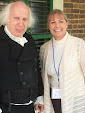
 A village couple dressed in 1910 style clothes

 Inside Edison's Menlo Park laboratory, where they still have some of the original lightbulbs burning!

 The Wright Shop, with bikes and small planes inside
 A car ride through the village

 The First Ford Motor Comp with a Model A

 Harvey Firestone's childhood home and farm


 A Tool Foundry and the Brass Candlestick that I made all by myself!
 The 1754 Daggett Farmhouse, a saltbox style typical to New England. The above is of the kitchen
 The train yard and switch
 Noah Webster's home and some of his first dictionaries. He standardized the English spelling for us. No more hukd on fonix...
 A village couple dressed in 1910 style clothes
 Inside Edison's Menlo Park laboratory, where they still have some of the original lightbulbs burning!
 The Wright Shop, with bikes and small planes inside
 A car ride through the village
 The First Ford Motor Comp with a Model A
 Harvey Firestone's childhood home and farm


 The fort is criss crossed with many traverses, which are earthen mounds that have bunkers below them. They store supplies and help protect the men during bombardments.
 A scale model of what the site would have looked like in the day. Many soldiers developed diseases such as typhoid due to dirty and unsanitary conditions. The site today looks pretty with all its lush green grass, however, grass would not have been there during the war.


 Wonderful story to tell about this. This house is one of my Goodrich ancester's. I think one of the son's of Elijah Goodrich who owned much of the land in Hancock Mass at the time. This is an original building and pump to the time. I know that the Goodrich family who owns this land in late 1780's becomes a Shaker and many of my Goodrich and Bishop members becomes Shakers as well. Because I was a Goodrich descendent the docent turned on the pump and machinery to demonstrate its workings. Absolutely incredible! What you don't see is that I went into a below level basement where the pump and belts were that generated water power to operate the above machinery and all of it was circa 1760 inventions.


 The Kitchen above. This is only of of nearly a dozen that I took of the kitchen. It is the bottom length of that housing dorm, complete with cellars to keep meats and breads cool, cooking hearths and cooking ovens. At any time over 100 members could be living in the dorms and the members would have to cook three meals a day for them. I was told that members had rotating chores that extended several months. So, for three months you would be cooking, then another three months, weaving, then cleaning, or gardening, etc. Everyone had a chore to do all day long.


 At one point there was a large cemetery I was told. However, at some point it was replaced with a single memorial stone. On my next visit I anticipate getting in to see the original records of burials. There is a burial book with the Pittsfield Library detailing all the deaths of the multiple Shaker communities.