Sir William Johnson was instrumental in building alliances between the British and the Indians during the mid -1770's. Specifically the Six Nations, Mohawk and Iroquois Confederacy. William Johnson married Molly Brant, a Christianized Mohawk, which strengthened the ties between Johnson and the native tribes. Molly's brother, Chief Joseph Brant, will lead many bloody raids in the Mohawk Valley during the American Revolution, October 1780. The painting above depicts Fort Johnson as it was and reflects the dozens of Indians and Chiefs that came to the Johnson home with greetings and grievances.


As Fort Johnson is today


An 18th privy fitting for a man of Johnson's station in society

An interior wall - soldiers would have fought an enemy through the openenings

Relics found during an archealogical dig


A painting depicting the fort from a hilltop view, in the lower right

Most of the furniture in the home is original to William Johnson that had been kept in the family

Dining Room

Bedroom

The Grand Hallway where dozens of Indians and Chiefs waited to see Sir Johnson

The portraits of some of those Chiefs. One being Joseph Brant, Molly's half brother, also a Christian

Sir William Johnson died in 1774 and his son John Johnson assumes his fathers position and will lead many of the bloody raids through the Mohawk Valley during the Revolution, including the Great Raid of October 1780
 And so it began here. 77 Patriot Minutemen were met by over 700 British soldiers on Lexington green. 18 Patriots lay dead or wounded with no British casualties. The Redcoats marched on to Concord across what is now Battle Road - Minuteman Park of the NPS
 The Green
 Memorial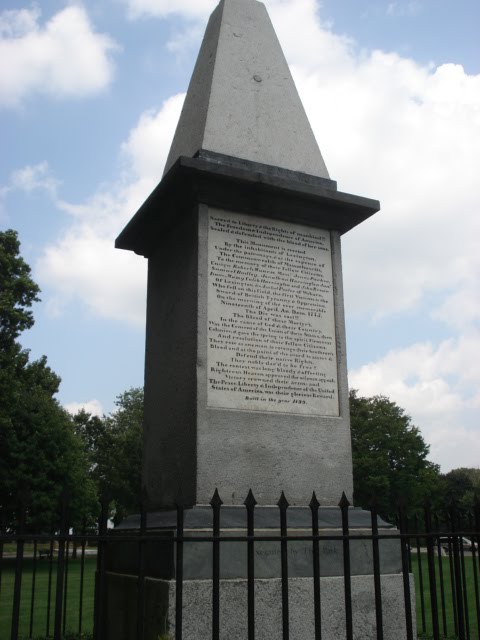
 Up close inscription
 Our Interpretor/Reenactor tells the story

 Buckman Tavern where the Minuteman had gathered when Paul Revere rode in to town with the alarm. Revere then rode to Hancock-Clarke house to alert John Hancock and Sam Adams that the Regulars were marching in with orders to seize the men. Revere, Dawes and Prescott will then ride up the Battle Road heading to Concord where the local townspeople had their ammunition and powder stored.
 After viewing Lexington photos go to my page for the MinuteMan Park and follow the ride of Revere, Dawes and Prescott.